
1. Wearing Shoes Indoors in Asia
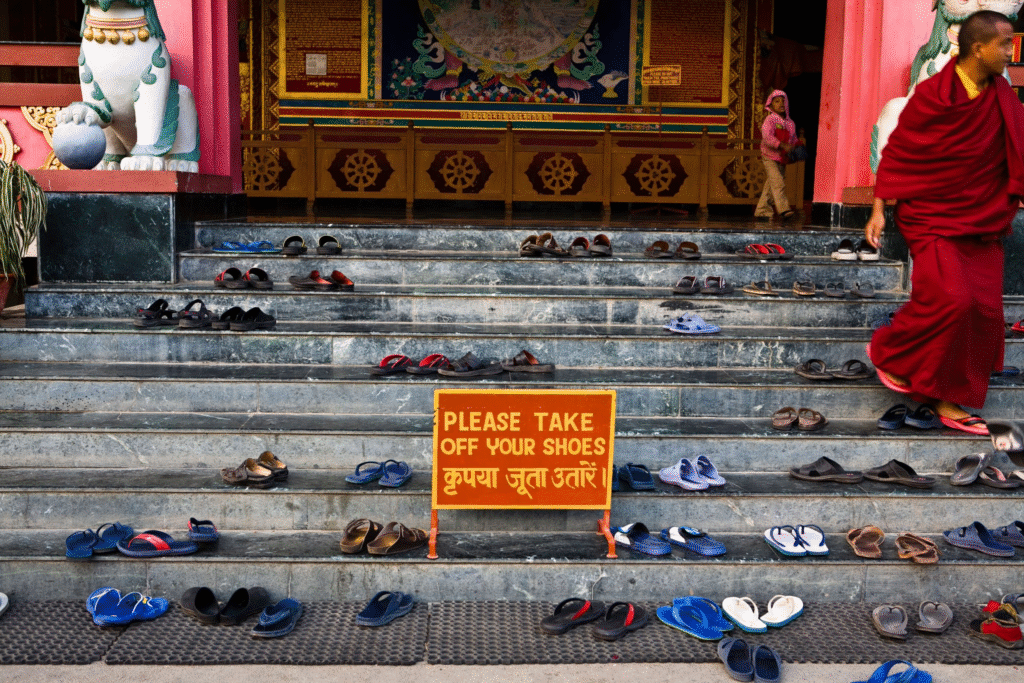
In many parts of Asia, especially Japan, Korea, and Thailand, wearing shoes inside a home or sacred space is deeply disrespectful. Shoes are considered dirty, carrying in dust, germs, and street debris. Taking them off is a gesture of respect and hygiene.
Tourists who forget or ignore this custom can quickly offend, especially in more traditional households or temples. In some places, separate indoor slippers are even provided. Understanding this small act goes a long way toward being seen as considerate. Leaving your shoes at the door isn’t just about cleanliness. It’s about humility.
2. Using the Left Hand for Eating in the Middle East
In many Middle Eastern and South Asian cultures, the left hand is traditionally used for hygiene purposes and is considered unclean for eating or greeting. When tourists use it to pass food, shake hands, or handle communal dishes, it can come across as offensive.
Even if you’re left-handed, it’s worth practicing using your right in these contexts. It’s not about personal habits, but shared values around dignity, hospitality, and cleanliness. In group meals especially, the right hand becomes a symbol of courtesy. Ignoring this norm may lead to quiet discomfort you may not even notice.
3. Taking Photos in Sacred Places
Snapping a quick photo might feel harmless, but in temples, shrines, and burial sites, it can deeply disrespect local beliefs. In countries like India, Cambodia, and Indonesia, flash photography in sacred spaces is not only distracting but sometimes outright forbidden.
These are places of prayer and mourning, not backdrops for Instagram. When tourists pose next to statues or altars, locals may feel that the spiritual significance is being reduced to a travel prop. Respecting posted signs and asking before photographing is a small act that honors centuries of tradition and deep-rooted reverence.
4. Smiling at Strangers in Certain Countries
In the U.S., smiling at strangers is often seen as friendly and polite. But in places like Russia, Germany, or Japan, smiling too freely at someone you don’t know can seem insincere, intrusive, or even suspicious. In those cultures, a smile is something you reserve for people you genuinely know or care about.
Tourists who smile at everyone might be seen as naive or overly eager. That doesn’t mean being cold, just more culturally tuned in. Adapting to local social cues helps avoid awkward interactions and shows that you’re not just visiting, you’re learning.
5. Tipping in Japan

Instead, appreciation is shown through polite behavior, a bow, or a simple thank you. Japan’s hospitality culture is rooted in excellence without expecting more. Tourists who insist on tipping may think they’re being generous, but they may unintentionally signal that they believe the service was lacking without it.
For most Americans, leaving a tip is second nature. It’s a gesture of gratitude. But in Japan, tipping can come across as awkward or even insulting. Service there is built on pride and professionalism, not extra cash. A tip might confuse or embarrass a server who sees great service as the standard.
6. Showing the Soles of Your Feet
In many countries across Asia and the Middle East, the soles of your feet are considered the lowest, dirtiest part of the body. Pointing them at someone, propping them up on furniture, or sitting in a way that displays them can be deeply disrespectful, especially in religious or formal settings.
What feels like casual comfort to an American tourist can quickly be read as rudeness elsewhere. In places like Thailand or Egypt, always sitting with your feet flat on the floor or tucked neatly beneath you is a sign of respect. Keeping your feet to yourself isn’t just polite—it’s a small way to show humility in a culture that places high value on body language.
7. Touching Someone’s Head in Southeast Asia
In many parts of Southeast Asia, particularly Thailand and Laos, the head is considered the most sacred part of the body. Even touching a child’s head—something that might feel affectionate in the West—can be seen as inappropriate or disrespectful.
Tourists may not realize how physical gestures change across cultures. While a head pat might be second nature for some, in this context it’s intrusive. This belief stems from Buddhist traditions, where the head is the seat of the soul. If you’re unsure how to greet or interact physically, a friendly nod or smile often goes much further without causing unintended offense.
8. Eating While Walking in Japan
In many Western cities, grabbing a snack on the go is a time-saving convenience. But in Japan, eating while walking is generally frowned upon. It’s considered messy, disrespectful, and disruptive to the clean and orderly flow of public spaces.
This cultural preference stems from a strong societal emphasis on mindfulness and respect. Eating is something to be done seated, with focus and gratitude. Tourists strolling with ice cream or munching chips may attract curious or disapproving looks—not because anyone is offended by the food itself, but because the setting feels wrong. Taking a moment to pause and enjoy your food in one place speaks volumes about cultural awareness.
9. Hand Gestures That Don’t Translate
Hand signs that are harmless or positive in the U.S. can mean something entirely different—or even vulgar—abroad. The “OK” sign, for example, is deeply offensive in parts of Brazil and Turkey. The thumbs-up gesture isn’t universally positive either and has negative meanings in several Middle Eastern countries.
Gestures are a powerful part of nonverbal communication, and assuming they carry the same meaning everywhere can get a tourist into awkward or even hostile situations. It’s always best to learn a few local customs or just stick to polite words and nods. Sometimes the safest message is sent with a simple smile and a bit of humility.
10. Refusing Food or Drink Offered by a Host
In many cultures—especially across the Middle East, Latin America, and parts of Asia—turning down food or drink offered by a host can be seen as rude, even if you’re genuinely full or not thirsty. Hospitality is a core value, and refusing it may feel like a personal rejection.
Even if you only take a small sip or bite, accepting the offer shows gratitude and respect. Tourists who don’t understand this might unintentionally appear cold or dismissive. Sharing food, even briefly, helps form bonds and shows appreciation for a host’s kindness. It’s not about hunger—it’s about connection.
11. Standing Too Close (or Too Far)
Personal space varies wildly around the world. In countries like Argentina or Italy, close conversation distances are normal and reflect warmth and connection. In others, like the U.S., Germany, or Japan, people expect more physical distance during interactions.
Tourists who misread this invisible boundary might come off as standoffish or overly forward, depending on where they are. Paying attention to local body language—how close people stand in lines, at restaurants, or while talking—can help avoid awkwardness. It’s not just about comfort. It’s about signaling respect in the unspoken ways that matter most.
12. Giving Certain Gifts
Gift-giving seems simple, but the details can carry deep meaning. For instance, in China and Japan, giving clocks or umbrellas can be associated with funerals or bad luck. In many Asian cultures, gifts are also expected to be given or received with both hands as a sign of respect.
Tourists buying souvenirs or thanking a host may unknowingly offer something symbolic of loss or sorrow. Even wrapping paper colors can matter—white is linked to mourning in some cultures. Doing a bit of research or asking a local guide before giving a gift can help avoid confusion or discomfort, and turn a nice gesture into a truly thoughtful one.
13. Entering Sacred Sites Without Proper Clothing

While sightseeing, tourists often stumble into places of worship like temples, mosques, or churches. But forgetting to cover your shoulders, legs, or even your head in some cases can be seen as disrespectful or irreverent, no matter how well-intentioned your visit.
In countries like Italy, Indonesia, or India, modest attire is expected when entering religious spaces. Scarves are often provided, but travelers should be prepared with simple clothing that meets basic guidelines. These dress codes aren’t about fashion—they’re about reverence. When you respect a place’s rules, you show that you’re not just passing through, you’re willing to pause and honor what matters there.