
Burger Chef
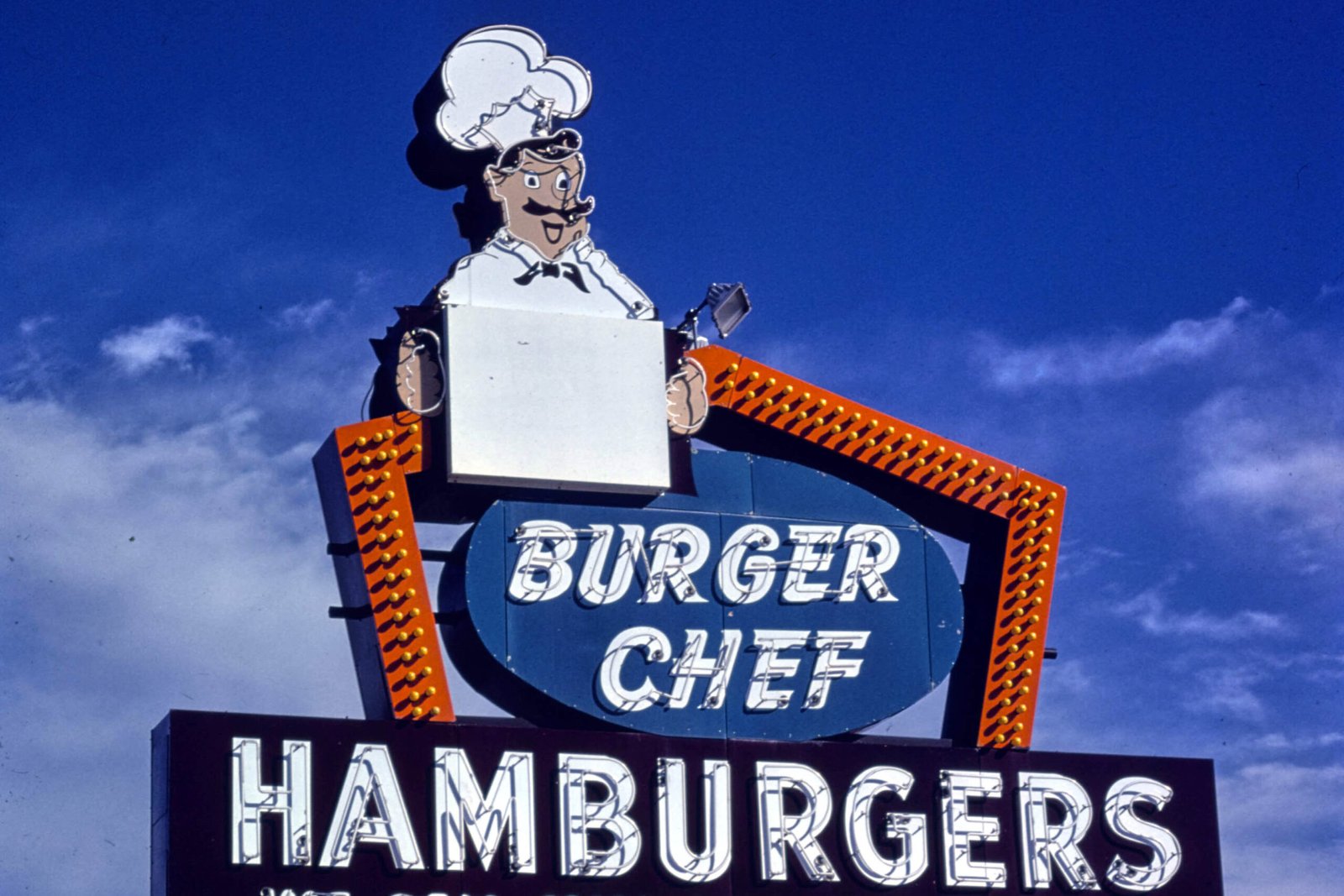
In the 1960s and 70s, Burger Chef was more than a rival to McDonald’s, it was a full-blown cultural moment. With its distinctive flame-broiled burgers and futuristic decor, it drew in families with a promise of fun, flavor, and affordability. Their “Funmeal,” complete with toys and themed packaging, even beat the Happy Meal to market. Kids looked forward to the colorful cartoon characters, while adults appreciated the generous portions and low prices.
Then, like a flicker of neon in a storm, it began to fade. Management changes, branding confusion, and fierce competition chipped away at its market share. Despite having over a thousand locations at its peak, Burger Chef slowly disappeared from highways and main streets. For many who grew up in its heyday, the name still sparks a memory, a parking lot full of laughter, fries in a paper pouch, and the kind of family meal that felt like an outing, not just a necessity. It may be gone, but in the minds of those who remember, it’s still sizzling.
Howard Johnson’s
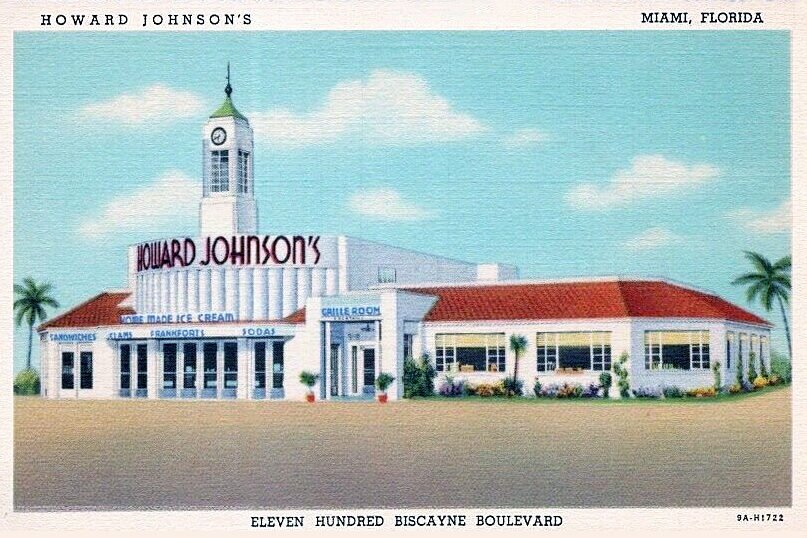
Howard Johnson’s was once the roadside king of comfort food. With its orange roof, turquoise spire, and classic diner menu, it wasn’t just a place to eat, it was part of the great American road trip. Families would pull in after hours on the highway, ready for a hot plate of fried clams or a towering ice cream sundae in one of their signature 28 flavors. The booths were cozy, the uniforms familiar, and everything about it felt like a warm hug for the weary traveler.
At its peak, it was everywhere. But the magic started to unravel in the 80s and 90s. A changing economy, new competitors, and inconsistent updates left it looking dated. As travel culture shifted, so did tastes. Locations dwindled and eventually vanished, with the final restaurant in Lake George, New York, quietly closing in the 2020s. For those who grew up counting HoJo signs from the backseat, the chain wasn’t just a pit stop. It was a childhood ritual, now relegated to memory.
Gino’s Hamburgers
If you grew up near the East Coast in the 60s or 70s, Gino’s was the spot. Known for its partnership with the Baltimore Colts and its founder Gino Marchetti, the fast food chain blended sports pride with a killer burger and fries combo. Their Gino Giant, a two-patty marvel, competed directly with the Big Mac and to many fans, it won. The chain also housed KFC franchises inside many of its locations, making it a one-stop shop for both burgers and fried chicken.
But despite its local devotion, Gino’s couldn’t keep up with national expansion demands. By the 80s, it was sold off, its signage replaced, and its legacy faded into the shadows. A few revival attempts have sparked over the years, but the original charm is hard to replicate. For those who grew up cheering with their combo meals and wiping ketchup off their jerseys, Gino’s wasn’t just fast food. It was a hometown favorite that fed more than just stomachs, it fed pride.
Steak and Ale
Steak and Ale felt like grown-up dining for the middle-class family. Its dim lighting, wood-paneled booths, and salad bar built into a barrel gave it a medieval tavern vibe that somehow worked in suburban strip malls. This was where people went for birthdays, date nights, or when they just wanted to feel a little fancy without breaking the bank. Their garlic bread and sizzling steak platters were enough to make anyone feel like royalty for the evening.
Founded in the 1960s, the chain peaked in the 80s, bringing affordable steak dinners to towns all across America. But by the early 2000s, the concept couldn’t keep up with flashier competitors or changing tastes. One by one, locations shut their doors, and a once-familiar name vanished from signs and hearts alike. Still, ask anyone who dined there, and their eyes light up. The memory of leaning over a bubbling plate of sirloin while your dad ordered a baked potato with the works? That never disappears.
Bennigan’s
Bennigan’s brought Irish pub vibes to American strip malls, serving up Monte Cristo sandwiches and loaded potato skins with an energy that felt both casual and festive. It was the kind of place where office workers gathered for happy hour and families came for weekend lunches. The booths were deep, the portions hearty, and the staff was always just friendly enough to make you feel like you were part of the regular crowd, even if it was your first visit.
Founded in the late 70s and booming through the 80s and 90s, Bennigan’s had a loyal following. But mismanagement and economic downturns in the 2000s led to mass closures. While a few locations and franchised efforts have tried to bring it back, the original charm remains frozen in time. For many, Bennigan’s represented that sweet spot between fast food and fine dining, a place where mozzarella sticks and margaritas could exist in perfect harmony. Its absence now leaves a quiet echo in suburban restaurant nostalgia.
Chi-Chi’s
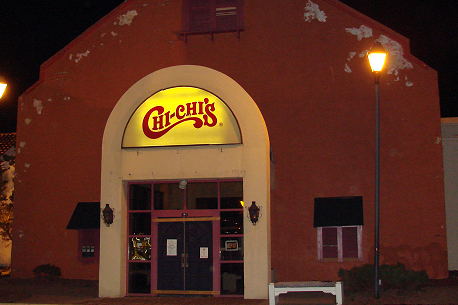
In the 1980s, Chi-Chi’s was the place to celebrate. Birthdays, promotions, first dates, it all happened under the festive glow of fake cacti and colorful papel picado banners. This was Tex-Mex before Tex-Mex was everywhere. People came for the chimichangas, stayed for the fried ice cream, and always left with a belly full of chips and salsa.
Chi-Chi’s made Mexican food approachable for suburban America. But a series of health scares and financial missteps in the early 2000s caused the once-lively chain to crumble. By 2004, it had disappeared from the American map entirely. Yet for those who celebrated milestones in its vibrant booths or discovered their first taste of guacamole there, Chi-Chi’s was unforgettable. It wasn’t just a restaurant—it was a party in a parking lot. Today, the name still triggers a sensory memory: sizzling fajitas, mariachi music, and the loud cheer of “Happy Birthday” echoing from one side of the dining room to the other.
Kenny Rogers Roasters
Kenny Rogers Roasters came in hot in the 90s with rotisserie chicken that aimed to be both hearty and healthy. The country music legend lent his name to the chain, and for a while, it worked. The restaurants felt like a home-cooked meal with a commercial twist. The menu was packed with southern sides, warm rolls, and that perfectly seasoned bird that fell right off the bone.
Though popular in its early years, especially after a famous feature in an episode of Seinfeld, the chain couldn’t sustain momentum in the U.S. Crowded out by rising competition in both fast food and fast casual sectors, most domestic locations shut down by the early 2000s. Strangely enough, the brand still thrives overseas, especially in parts of Asia. But for American fans, Kenny Rogers Roasters remains one of those curious food memories: a place where the meals were warm, the music was soothing, and somehow, dinner felt like a duet.
Rax Roast Beef
Once positioned as a serious rival to Arby’s, Rax Roast Beef had a unique twist on fast food: a salad bar that felt borderline gourmet and a menu that dared to branch beyond beef. Potato skins, pasta dishes, even baked potatoes made the cut. At its peak, Rax was ahead of its time, offering more variety and a slightly upscale feel that gave it an identity all its own.
But branding issues, rapid expansion, and inconsistent leadership caused Rax to spiral. Its identity became muddled, and despite loyal regional fans, locations slowly disappeared through the 90s. A few spots still exist today, holding on like time capsules from a different dining era. For those who remember grabbing a curly fry while juggling a Styrofoam plate from the salad bar, Rax wasn’t just lunch, it was an adventure. One of the last great experiments of fast food before the industry split into fast casual and drive-thru domination.
Sambo’s
Sambo’s began as a coffee shop in the 1950s and grew rapidly into a popular breakfast chain, known for pancakes, friendly prices, and an all-American menu that kept families coming back. At its height, it had more than a thousand locations and rivaled Denny’s for diner-style dining dominance.
But the brand’s name and marketing, rooted in outdated and racially insensitive imagery, sparked national controversy. As social consciousness evolved, so did public sentiment. The backlash led to mass rebrandings and closures. By the 1980s, the damage was done. The chain that had once been a staple of roadside breakfasts became a relic. While only one location remains under the original name, Sambo’s is mostly remembered now as a cautionary tale about branding and accountability. Still, for many kids, it was the first place they ever ordered a short stack or begged for extra syrup, and that kind of memory tends to linger, no matter how complex the legacy.
Lum’s
Hot dogs steamed in beer may not sound like a mainstream hit today, but in the 1960s and 70s, Lum’s made it feel like the height of culinary innovation. This quirky chain started in Miami and spread across the country, promising a unique take on American comfort food in a tiki-inspired setting. It was a mashup of diner and dive bar, casual yet completely distinctive.
Lum’s grew fast, even landing a spot on the Las Vegas Strip. But by the 1980s, it was losing steam. Ownership changed hands, menus lost focus, and competitors caught up quickly. One by one, the restaurants closed until Lum’s was just a memory. Still, for those who ever bit into one of those beer-soaked dogs or nursed a root beer float in a vinyl booth, the nostalgia runs deep. Lum’s wasn’t like the others and maybe that’s why we still think about it today, long after the signs came down.